Why Ngong Is the Smartest Place to Settle in 2026 — Affordable, Connected & Booming
If you had to pick one town on the outskirts of Nairobi that is about to experience a dramatic leap in property values, infrastructure, and quality of life, Ngong would be it. Sitting just beyond Karen — Nairobi’s most prestigious suburb — Ngong has spent years in the shadow of its wealthy neighbour. But in 2026, the tables are turning. A convergence of massive infrastructure projects, institutional investment, affordable housing, and natural beauty is transforming Ngong from a quiet satellite town into one of Kenya’s most attractive places to live, work, and invest.
Minutes from Karen, a Fraction of the Price
Ngong’s single most powerful advantage is its proximity to Karen. The two areas share a border, connected by the Karen-Ngong road that takes just 10 to 15 minutes to drive. Karen residents shop at the same supermarkets, eat at the same restaurants, and visit the same hospitals as Ngong residents. Children from Ngong attend schools in Karen and vice versa. In practical terms, the lifestyle difference between Karen and Ngong is shrinking every year.
But the price difference remains enormous. A quarter-acre plot in Karen will set you back KES 25–50 million. In Ngong, that same quarter acre costs KES 3–8 million depending on exact location. A four-bedroom house in Karen starts at KES 45 million. In Ngong, you can find well-finished four-bedroom homes from KES 10 million. For buyers who want the Karen lifestyle without the Karen price tag, Ngong is the answer — and the market is catching on fast.
The Ngong-Suswa Road — A Game Changer
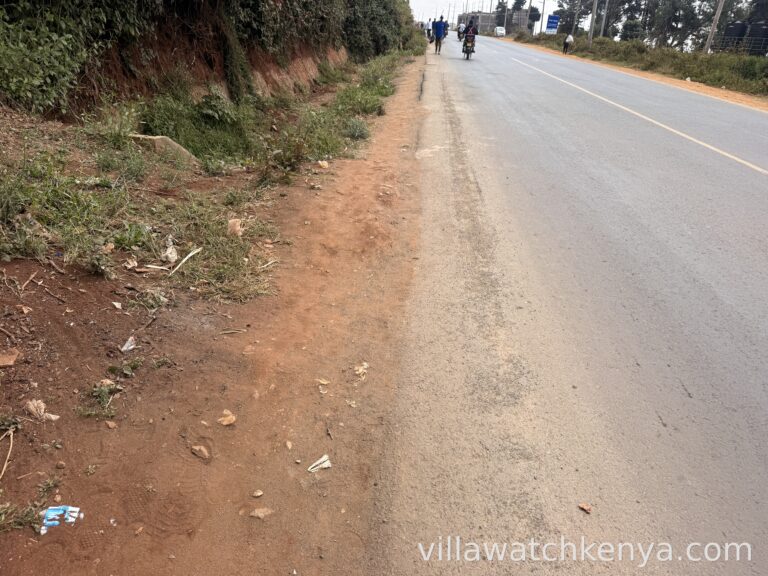
No single infrastructure project has reshaped a Kenyan town’s prospects more dramatically than the new Ngong-Suswa highway. This modern dual carriageway connects Ngong directly to the Nairobi-Mai Mahiu-Narok highway and onwards to Suswa, opening up a fast, efficient transport corridor that was previously a narrow, congested, accident-prone road.
The impact on Ngong is transformative. The highway has slashed travel times to Narok, the Maasai Mara, and the broader South Rift region. It has made Ngong a strategic transit point for commercial traffic heading to and from western Kenya. And critically, it has signalled to investors, developers, and institutions that Ngong is a town the government is serious about developing.
Property values along the Ngong-Suswa corridor have already responded. Land within 2 kilometres of the new highway has appreciated by 20–40% since construction began, and the trajectory is firmly upward. For property buyers, the lesson from Kenyan real estate history is clear — towns that receive major highway upgrades experience sustained, long-term value appreciation. Ngong is following the same playbook that transformed Syokimau after the SGR, and Ruaka after the Northern Bypass.
IGAD Regional Headquarters — International Credibility
Ngong is home to the headquarters of the Intergovernmental Authority on Development (IGAD), the eight-member regional bloc comprising Kenya, Uganda, Ethiopia, Somalia, Djibouti, Eritrea, South Sudan, and Sudan. The presence of IGAD’s offices brings with it a community of international diplomats, development professionals, and support staff who live and work in the Ngong-Karen corridor.
This international institutional presence does more than add prestige. It drives demand for quality housing, supports premium rental rates, and encourages the development of international-standard amenities and services in the area. Towns that host international organisations — think Gigiri with the UN compound, or Westlands with the World Bank offices — invariably see their property markets benefit from the economic activity and social infrastructure these institutions bring.
IGAD’s presence in Ngong is a strong, permanent anchor that underpins the town’s long-term growth trajectory and gives property investors confidence that the area will continue to attract high-quality tenants and buyers.
Affordable Housing — Opening the Door to Homeownership
Ngong has been identified as a key zone for Kenya’s Affordable Housing Programme, one of the government’s flagship development initiatives. Several affordable housing projects are either under construction or in advanced planning stages in the greater Ngong area, targeting first-time homebuyers and middle-income families who have been priced out of Nairobi proper.
These developments are delivering modern, well-designed apartments and maisonettes at price points between KES 2 million and KES 6 million — price brackets that are almost impossible to find within Nairobi’s city limits. For young professionals, newly married couples, and families taking their first step onto the property ladder, Ngong’s affordable housing projects represent a genuine path to homeownership.
The affordable housing push is also accelerating infrastructure investment in the area. New roads, water supply systems, sewer connections, and electricity distribution networks are being built to support these developments — infrastructure that benefits all Ngong residents and property owners, not just those in the affordable housing projects themselves.
A Town That Has Everything — Major Banks and Growing Commerce
One of the clearest indicators that a Kenyan town has arrived is the presence of major commercial banks. Ngong now hosts branches of virtually every major bank in Kenya — Equity Bank, KCB, Co-operative Bank, NCBA, Absa, Stanbic, DTB, and Family Bank all have branches serving the growing Ngong population. This banking infrastructure is a direct response to the town’s expanding economic activity and population growth.
Beyond banking, Ngong’s commercial landscape has expanded rapidly. Modern shopping centres, supermarkets including Naivas and Quickmart, petrol stations, hardware stores, restaurants, and professional services like law firms, insurance offices, and medical clinics now line the main roads. The town has its own vibrant market — the famous Ngong Market — which draws traders and shoppers from across the region.
For residents, this means that daily life in Ngong no longer requires trips to Karen or Nairobi for basic services. Everything from grocery shopping to banking, healthcare to vehicle servicing, is available locally. This self-sufficiency is a key quality-of-life indicator and a strong signal that Ngong has matured from a dormitory town into a fully functional urban centre.
Planned Dualling of Karen-Ngong Road
If the Ngong-Suswa highway opened the back door, the planned dualling of the Karen-Ngong road is about to widen the front entrance. This critical road connects Ngong directly to Karen, Langata, and the CBD, and it has long been the primary route for Ngong commuters heading into Nairobi.
The current single-carriageway road handles traffic volumes far beyond its original design capacity, leading to congestion during peak hours. The planned upgrade to a dual carriageway will dramatically increase capacity, reduce travel times, and improve safety along this corridor. For property buyers, this is arguably the most important upcoming infrastructure development in the Ngong area.
History shows that road dualling in Nairobi’s satellite towns has a direct and measurable impact on property values. When the Thika Highway was upgraded from a single carriageway to a superhighway, property values along the corridor doubled and tripled within five years. The dualling of Mombasa Road boosted Syokimau and Athi River property prices by similar margins. The Karen-Ngong road upgrade is expected to follow the same pattern — and smart buyers are positioning themselves before the construction begins and prices adjust.
The Ngong Hills — A Landscape Like No Other
Beyond the infrastructure and economics, Ngong possesses something that no amount of money can manufacture — natural beauty. The iconic Ngong Hills rise to 2,460 metres above sea level, forming a dramatic ridge that is visible from across Nairobi. These four distinctive knuckle-shaped peaks have been a Nairobi landmark for over a century, immortalised in literature and cherished by hikers, nature lovers, and anyone who appreciates Kenya’s highland landscapes.
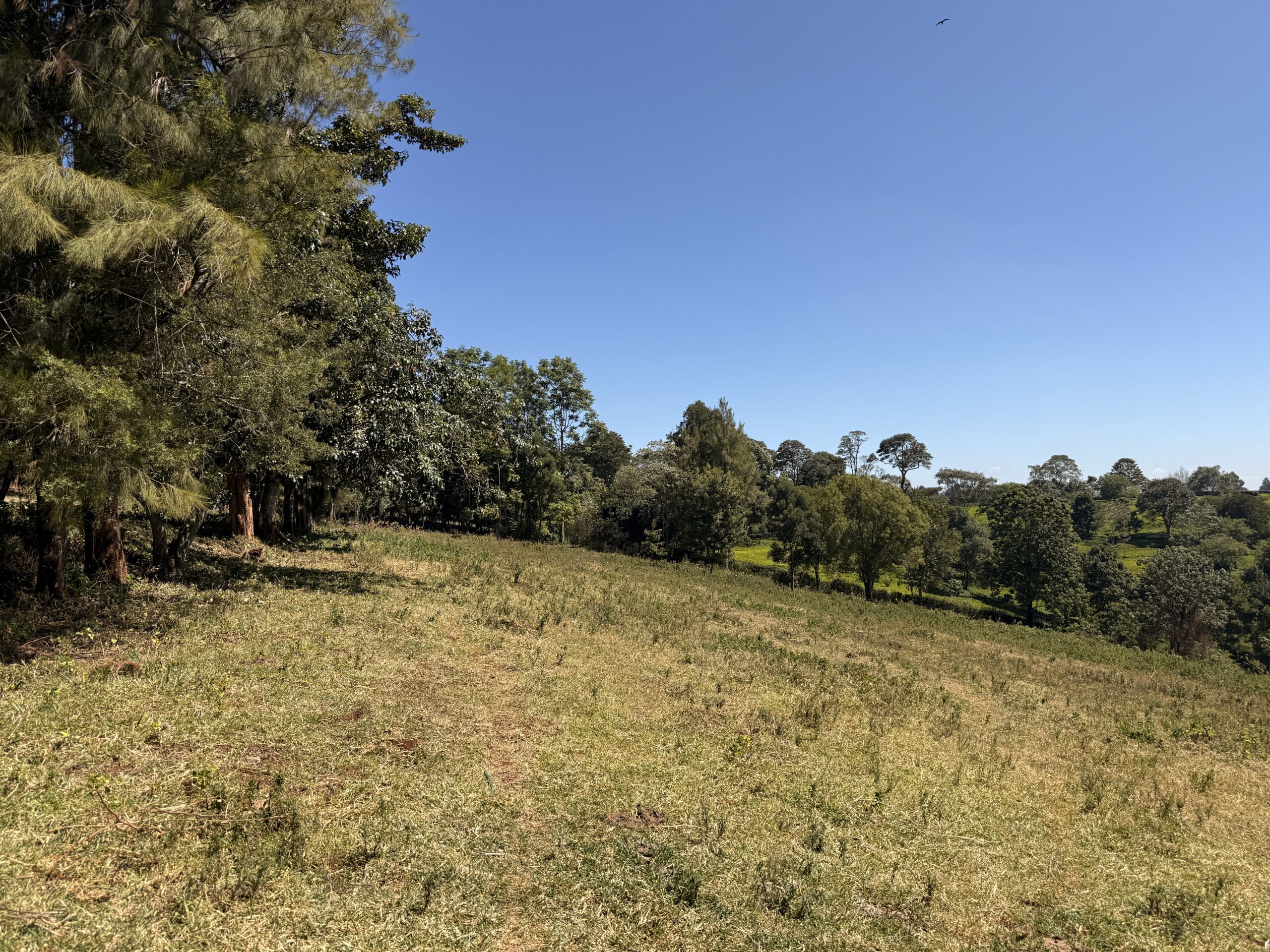
Living in Ngong means waking up to views of these hills. It means weekend hikes along the ridge trail, where you can see the Rift Valley floor on one side and the sprawl of Nairobi on the other. It means watching spectacular sunsets paint the hills in shades of gold and purple. For many residents, the Ngong Hills are not just a backdrop — they are the reason they chose to live here.
The climate complements the landscape. At an elevation of approximately 1,800–2,000 metres, Ngong enjoys a cool highland climate with temperatures typically ranging from 12°C to 24°C year-round. The air is fresh, the evenings are cool enough for a light jacket, and the reliable rainfall keeps the landscape green and lush. Compared to the heat and dust of Nairobi’s eastern suburbs, Ngong offers a living environment that is measurably healthier and more pleasant.
Property Prices in Ngong 2026
Ngong’s property market caters to a wide range of budgets, from affordable starter homes to premium hillside properties with commanding views.
Land prices: ⅛ acre from KES 1.5 million in emerging areas to KES 5 million near the town centre and Karen border. Quarter acres range from KES 3 million to KES 8 million. Prime acres near the Ngong Hills or along the Suswa highway fetch KES 10–20 million.
3-bedroom houses: KES 6 million to KES 15 million. Bungalows and maisonettes in estates like Ngong Township, Matasia, and Kibiko offer family-friendly homes with gardens and parking.
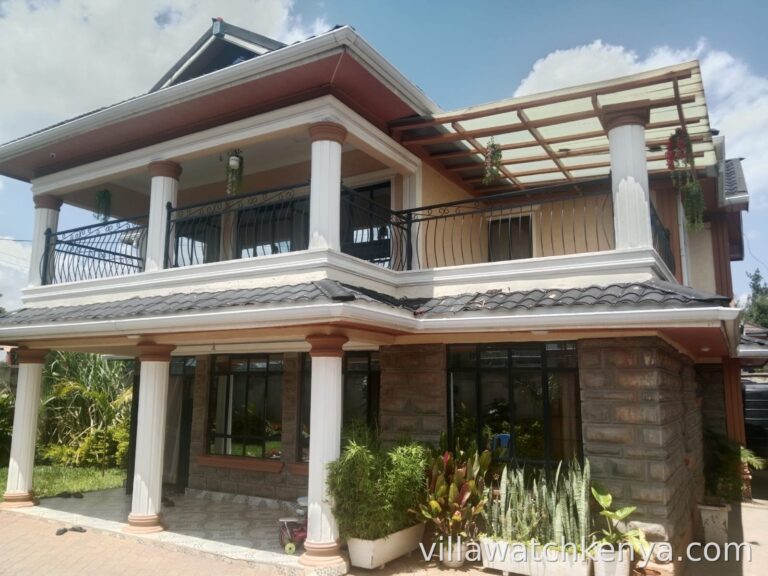
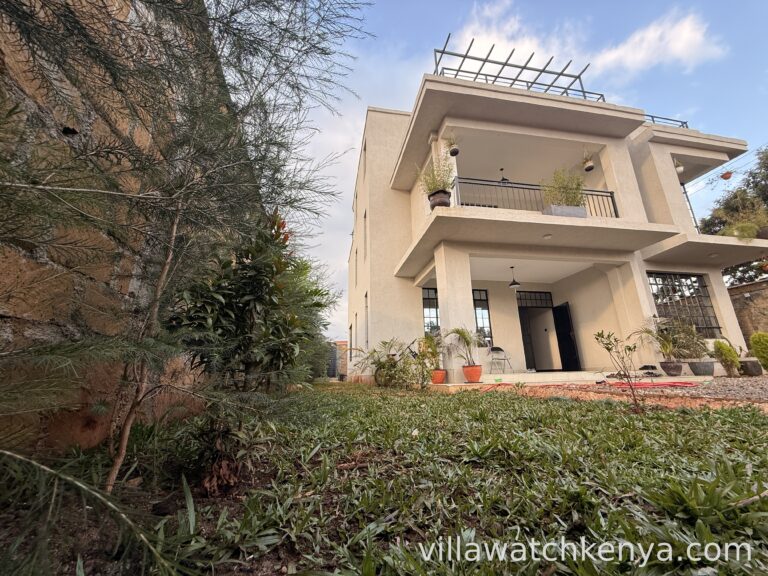
4-bedroom houses: KES 10 million to KES 25 million. Modern four-bedroom homes in gated communities with security, paved roads, and water supply are the most popular property type in Ngong.
Apartments: KES 3 million to KES 8 million for 1 to 3-bedroom units. Apartment developments are increasing along the main Karen-Ngong road, targeting young professionals and investors seeking rental income.
Rental yields: Ngong offers gross rental yields of 6–9% for apartments and 5–7% for houses — among the highest in the greater Nairobi region. Rental demand is driven by the growing employed population, IGAD staff, and families who work in Karen and the CBD.
Best Areas to Buy in Ngong
Ngong Township: The commercial and administrative centre. Best for investors seeking rental properties with high tenant demand and proximity to banks, shops, and transport.
Matasia: A rapidly developing residential area between Ngong town and the hills. Popular with families building their first homes. Several new gated estates are under construction.
Kibiko: Located on the Karen side of Ngong, Kibiko offers the closest proximity to Karen’s amenities. Land here commands a premium but offers the best of both worlds — Ngong prices with Karen convenience.
Ololua: Borders the Ololua Forest and Karen. A quiet, leafy area that attracts buyers seeking larger plots and a more rural feel. Property values are rising fast as Karen’s expansion pushes buyers across the border.
Kimuka and Olooltepes: Further from the town centre but offering the most affordable land and the most dramatic Ngong Hills views. Ideal for long-term investors and buyers planning to build.
Schools, Healthcare and Daily Life
Ngong’s education landscape has matured significantly. Local schools include Ngong Township Primary, Ngong Hills Academy, and Olooltepes Secondary School, while Karen’s premium schools — Braeburn Garden Estate, Hillcrest International, Banda School, and Karen C Primary — are all within a 15-minute drive.
Healthcare is served by Ngong Sub-County Hospital, multiple private clinics, and easy access to Karen Hospital, Nairobi Women’s Hospital (Karen branch), and the major facilities in the CBD and Upper Hill.
Daily commuting is manageable via matatu routes to Karen, the CBD, and Rongai. The planned road dualling will further improve commute times. For remote workers, Ngong’s fibre-optic internet coverage is expanding rapidly, with Safaricom Home Fibre and JTL available in many estates.
The Verdict — Ngong Is Where the Smart Money Is Going
Every few years, a Nairobi satellite town reaches a tipping point — the moment when infrastructure, demand, and development momentum combine to create explosive property growth. Ruaka had its moment. Syokimau had its moment. Kitengela is having one now. And in 2026, Ngong is reaching that critical inflection point.
The fundamentals are irresistible: a location bordering Karen, a brand-new highway to the Rift Valley, an international organisation headquartered in town, a government affordable housing push, every major bank represented, a planned road dualling that will transform connectivity, and a landscape and climate that are genuinely world-class. Add in property prices that are still a fraction of what comparable locations cost, and the investment case writes itself.
Whether you are a first-time buyer looking for an affordable family home, an investor seeking capital appreciation and rental yield, or someone who simply wants to live surrounded by green hills and clean air within commuting distance of Nairobi — Ngong is the place to be in 2026.
Find Ngong Properties on VillaWatch Kenya
VillaWatch Kenya lists verified homes, land, and apartments for sale in Ngong and the Karen-Ngong corridor. Our listings feature detailed photography, transparent pricing, and neighbourhood insights to help you make a confident buying decision. Browse Ngong properties now or contact our team for personalised help finding your ideal property in this fast-growing market.
Related Property Guides
- Cost of Buying a House in Karen — Ngong’s premium neighbour
- Rongai Property Guide — Another affordable alternative
- Cost of Land in Kitengela