
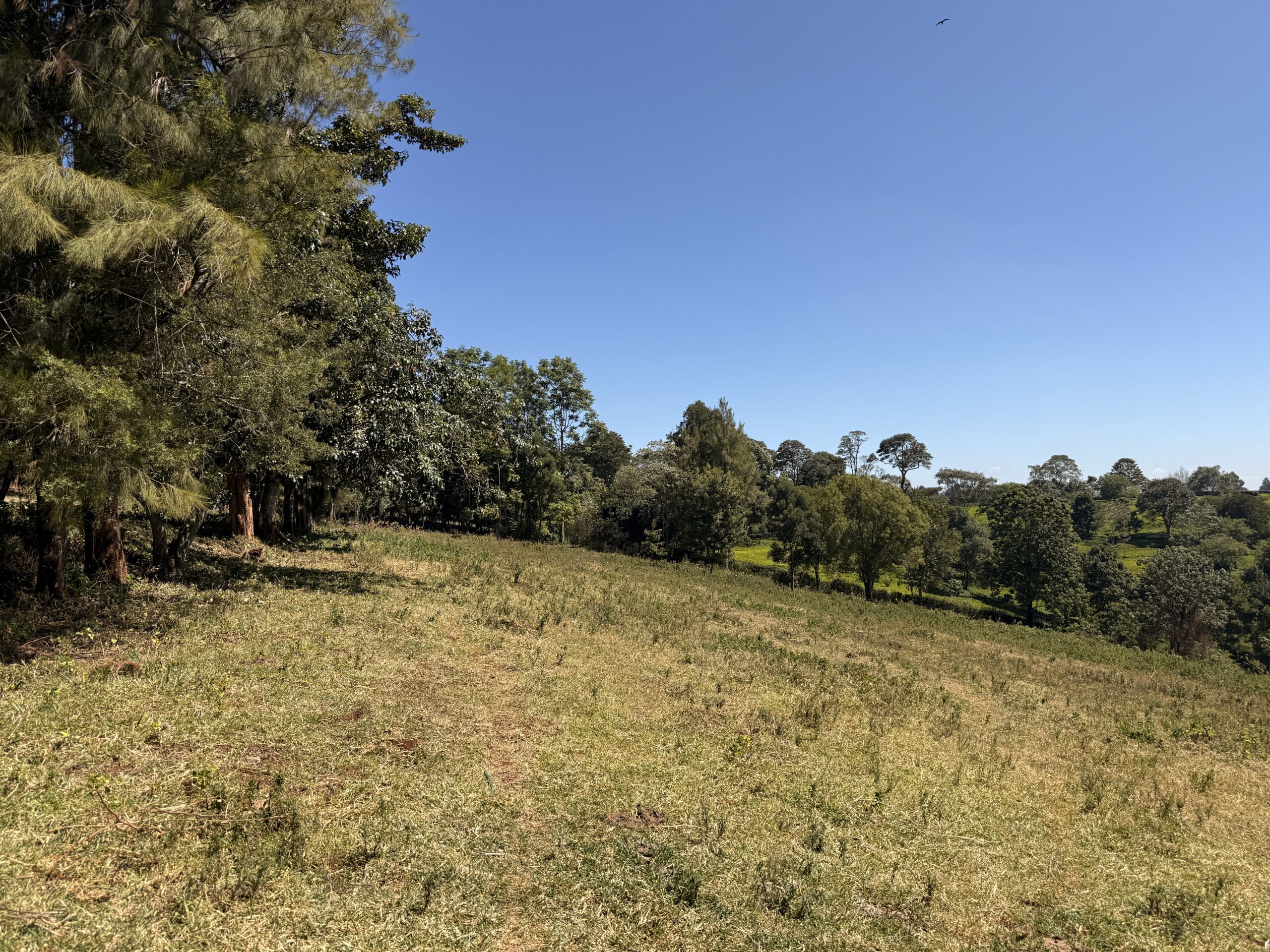
Why You Should Consider a Joint Venture on Your Undeveloped Prime Property in Nairobi
If you own undeveloped land in Kilimani, Westlands, Kileleshwa, Lavington or any of Nairobi prime suburbs, you are sitting on one of the most valuable assets in East Africa — and probably earning nothing from it. A joint venture property development in Nairobi lets you convert that idle land into a portfolio of income-generating apartments or a multi-million-shilling payout, without spending a single shilling of your own capital on construction.
This guide explains why a joint venture on prime property in Nairobi beats an outright sale for most landowners, how the numbers compare, what a fair deal structure looks like, and the safeguards you need before signing anything.
What Is a Property Joint Venture?
A joint venture (JV) on property in Nairobi is a partnership between a landowner and a developer. You contribute the land; the developer contributes construction capital, technical expertise and project management. When the project is complete, you share the finished units or sale proceeds according to an agreed ratio — typically structured through a Special Purpose Vehicle (SPV) that holds the land during construction.
We have covered the legal mechanics in detail — SPV transfers, sharing ratios and step-by-step procedures — in our guide to joint venture land development in Kenya. This article focuses on the strategic question: why should you consider one at all?
The Hidden Cost of Holding Idle Land in Nairobi
Undeveloped land feels like a safe asset — it cannot burn down, tenants cannot damage it, and Nairobi land values keep rising. But holding idle prime land has real costs that most owners underestimate:
- Land rates and rents: Nairobi County land rates on prime parcels run into hundreds of thousands of shillings annually — payable whether the land earns anything or not.
- Security and caretaking: Vacant plots in prime areas attract encroachment, illegal dumping and squatters. Most owners pay for fencing, a caretaker or both.
- Opportunity cost: A KES 150 million plot earning zero return costs you KES 12–15 million a year in foregone income compared to developed property yielding 8–10%.
- Succession risk: Idle family land is the single most disputed asset in Kenyan succession cases. A developed, income-sharing asset with clear documentation is far easier to pass on cleanly.
Joint Venture vs Selling Outright: The Numbers
The most common alternative to a JV is simply selling the land. Here is how the two paths compare for a typical half-acre plot in Kilimani worth KES 150 million:
| Factor | Outright Sale | Joint Venture |
|---|---|---|
| Upfront payout | KES 150M (once, taxed) | None — value converts to equity |
| Typical landowner share | — | 30–40% of completed units |
| Gross value of share | — | KES 210–280M in units (on a KES 700M project) |
| Ongoing income | None | KES 1.5M+ monthly rental income if units retained |
| Capital gains tax | 15% on the gain at sale | Deferred — payable per unit as/if you sell |
| Inflation protection | Cash erodes | Property appreciates |
In a well-structured Nairobi joint venture, the landowner share of completed units is usually worth 40–90% more than the current market value of the bare land. The trade-off is time: you wait 24–36 months for construction instead of banking a cheque today. For current values across the suburbs, see our Nairobi property prices by area guide.
Six Reasons to Consider a Joint Venture on Your Nairobi Property
1. Zero Capital Outlay
Developing a quarter-acre of apartments in Kilimani costs KES 400–700 million. Almost no individual landowner can finance that, and bank construction loans require collateral, presales and personal guarantees. In a JV, the developer carries the entire construction budget. Your land is your only contribution — and it never leaves the deal structure without your consent.
2. You Capture Development Profit, Not Just Land Value
When you sell bare land, the developer who buys it captures all the upside of construction. A JV puts you on the other side of that equation: your 30–40% share is calculated on the value of finished apartments, which in prime Nairobi typically totals 4–5 times the land value alone.
3. Long-Term Rental Income
Most landowners take their share in units rather than cash. Ten apartments in Kilimani renting at KES 80,000–120,000 each generate KES 800,000 to 1.2 million per month — indefinitely, with the assets still appreciating. This converts a dormant inheritance into generational income.
4. Professional Risk Management
Approvals from the County, NEMA and the National Construction Authority, contractor supervision, quantity surveying, marketing and sales — an experienced developer handles all of it. You avoid the classic fate of the self-developing landowner: a half-built structure, an exhausted budget and a stalled dream. Project registration requirements are published by the National Construction Authority.
5. Tax Efficiency
Selling land outright triggers capital gains tax of 15% on the entire gain immediately. In a properly structured JV, your land transfers into the SPV in exchange for equity — and tax is generally deferred until you actually sell your completed units, potentially years later and unit by unit. Use our Kenya stamp duty calculator to model transfer costs, and always confirm current treatment with a tax advisor, as KRA rules evolve.
6. Nairobi Demand Is on Your Side
Nairobi has a chronic shortage of quality housing in prime areas, and apartment demand in Kilimani, Westlands and Kileleshwa continues to outstrip supply. Our Nairobi property market outlook details the trends — densification of the old low-rise suburbs is the defining force of this market cycle, and owners of prime undeveloped plots are its biggest beneficiaries.
What Makes a Plot Attractive for a Joint Venture?
Developers compete hardest for land that ticks these boxes:
- Location: Kilimani, Kileleshwa, Westlands, Lavington, Riverside, Parklands and Upper Hill lead demand. Karen and Runda suit lower-density villa JVs.
- Size: From a quarter-acre upwards for apartments; half-acre-plus parcels command the best terms.
- Zoning: Areas re-zoned for high-rise development (much of Kilimani and Kileleshwa) support more units and therefore better landowner ratios.
- Clean title: A freehold or long-leasehold title with no disputes, charges or succession question marks. Title issues are the number-one JV deal-killer.
- Access and services: Sewer, water and road access reduce developer costs and improve your negotiating position.
The Risks — and How to Protect Yourself
A joint venture on property in Nairobi is not risk-free — the market has seen landowners burned by briefcase developers. The risks are real but manageable:
- Developer default: Vet track record ruthlessly — visit completed projects, speak to previous JV landowners, verify NCA registration and financial capacity.
- Unfair sharing ratios: Get an independent valuation of your land and a feasibility study before negotiating. Your ratio should reflect land value as a percentage of total project cost.
- Weak agreements: The JV agreement must specify timelines, penalties for delay, unit allocation (which floors, which sizes), exit clauses and dispute resolution. Never sign a developer template without your own advocate.
- Title transfer exposure: Structure the SPV so the land cannot be charged or sold without your consent. Our SPV transfer guide covers the protective mechanics in detail.
Frequently Asked Questions — Joint Venture Property in Nairobi
What share should a landowner get in a Nairobi joint venture?
Most Nairobi JVs allocate the landowner 30–40% of completed units or sale proceeds, depending on land value relative to total project cost, location and zoning. Prime Kilimani or Westlands plots with high-rise zoning command the top of that range — sometimes more.
Do I lose ownership of my land in a joint venture?
The land typically transfers to a jointly owned SPV during construction, in which you hold shares proportional to your stake. With a properly drafted agreement, the developer cannot sell or charge the land without your consent, and your equity converts to titled units on completion.
How long does a joint venture project take in Nairobi?
Expect 6–12 months for approvals and design, then 18–30 months of construction — roughly 24–36 months from signing to handover for a typical apartment project. Larger phased developments run longer.
Is a joint venture better than selling my land?
If you need cash immediately, sell. If you can wait two to three years, a JV typically delivers 40–90% more value than a sale, plus the option of permanent rental income. The right answer depends on your liquidity needs, age, succession plans and appetite for project risk.
How do I find a trustworthy developer for a joint venture?
Work through an established intermediary that vets developers professionally. VillaWatch maintains a network of NCA-registered developers with completed JV track records in Nairobi, and we represent the landowner side of the negotiation — not the developer.
Ready to Explore a Joint Venture on Your Land?
VillaWatch Kenya connects owners of prime Nairobi land with vetted, financially capable developers — and stands on your side of the table through valuation, ratio negotiation and the SPV agreement. Start with a free, no-obligation assessment of your plot development potential on our Joint Venture page.
Call or WhatsApp: 0722 077 779
Email: [email protected]
Or contact us here and tell us where your land is — we will respond within 24 hours.
Nairobi Joint Venture Property: FAQs
Selling gives a one-off payment; a joint venture lets a Nairobi landowner keep a stake, share in the finished development’s much higher value, and benefit from future appreciation — usually earning far more than a straight sale on well-located land.
High-demand, high-value areas work best — Kilimani, Kileleshwa, Westlands, Lavington, Riverside and the Kiambu Road corridor — where developers compete for serviced land and apartment demand supports strong sales.
The landowner contributes the title to the land; the developer funds construction, approvals, marketing and sales. Contributions are valued and the proceeds split by an agreed ratio, typically through a special-purpose company (SPV).