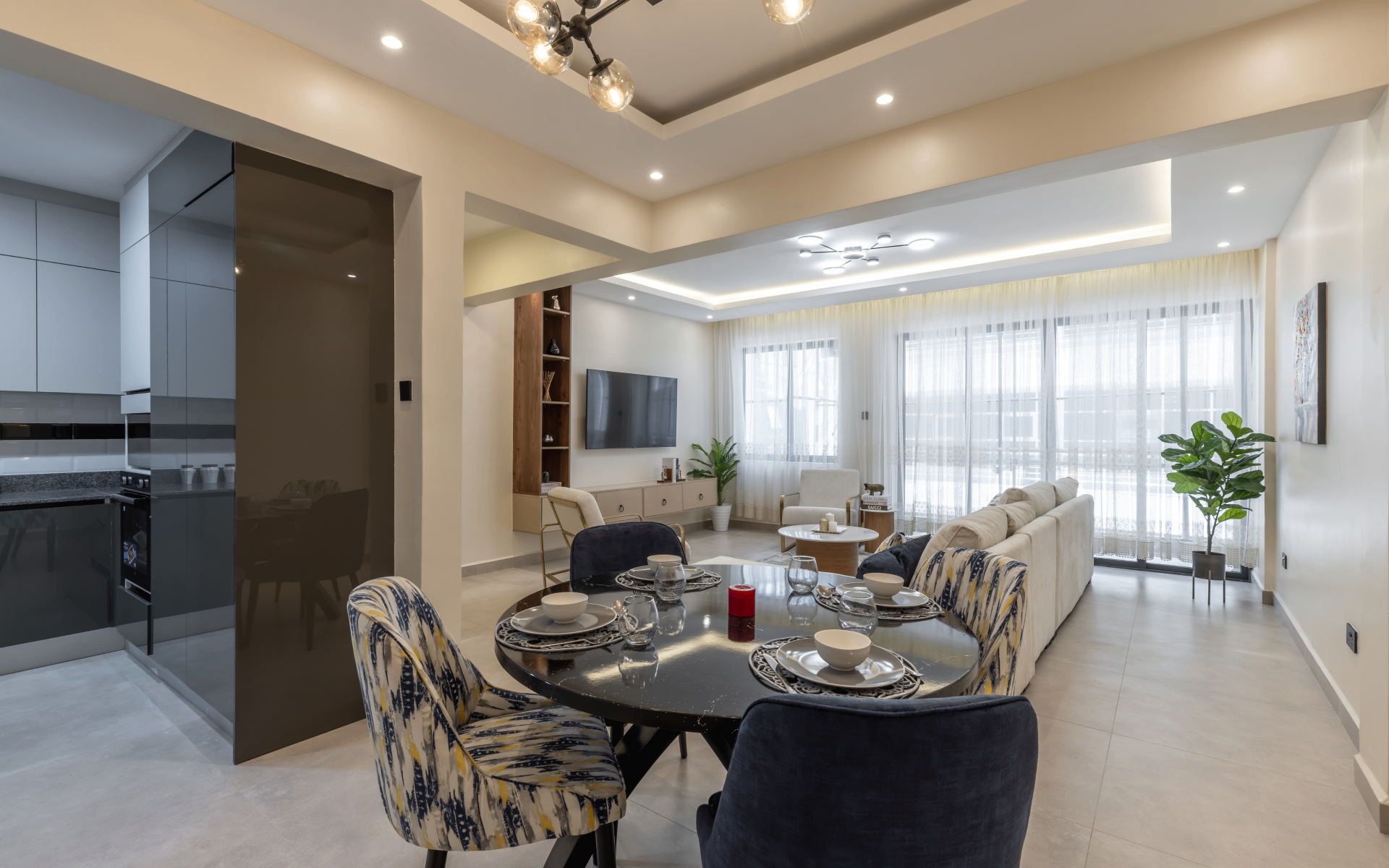
Living in Kilimani, Nairobi — Complete 2026 Neighbourhood Guide
Kilimani is one of Nairobi’s most sought-after residential addresses — a mid-city neighbourhood that blends urban convenience with leafy streets, upscale apartments, and some of the capital’s best restaurants, schools, and shopping. If you are considering buying or renting property in Nairobi, Kilimani belongs at the top of your shortlist.
This guide covers everything you need to know about living in Kilimani, Nairobi in 2026 — from current property prices and rental yields to schools, transport, safety, and whether it makes a sound long-term investment.
Where Is Kilimani?
Kilimani sits roughly 4 kilometres west of Nairobi’s Central Business District, bordered by Kileleshwa to the north, Lavington to the west, and Upperhill to the east. Its central location is one of its biggest selling points — you can reach the CBD in under 15 minutes outside peak hours, and major employment hubs in Upperhill and Westlands are both within easy reach.
The neighbourhood is centred on Argwings Kodhek Road, Kindaruma Road, and Dennis Pritt Road — all lined with apartment blocks, townhouses, restaurants, and retail outlets.
Transport & Getting Around
Kilimani’s transport links are a major draw for professionals and families alike.
- Road access: Argwings Kodhek Road connects directly to Ngong Road and the Southern Bypass, while Kirichwa Road links to Uhuru Highway. Most parts of Kilimani are reachable in under 20 minutes from major employment centres outside rush hour.
- Matatus & buses: Multiple matatu routes serve Kilimani via Yaya Centre and Hurlingham stops, connecting the neighbourhood to the CBD, Westlands, and Karen.
- Ride-hailing: Uber, Bolt, and Little Cab are readily available 24/7 — a trip to the CBD typically costs Ksh 300–500.
- Walking & cycling: The area around Yaya Centre and Adlife Plaza is increasingly walkable, though pavements can be inconsistent on side streets.
Peak-hour congestion on Argwings Kodhek Road and Ngong Road can add 20–40 minutes to commutes. Residents often adjust their schedules accordingly or use Kilimani’s abundant work-from-home-friendly cafes.
Schools in Kilimani, Nairobi
Kilimani and its immediate surroundings are home to several reputable schools, making it a popular choice for families with children.
International & Private Schools Near Kilimani
- Braeburn School Lavington — British curriculum, 5 minutes away in Lavington
- The Hillcrest School — Karen-based but widely attended by Kilimani residents
- Nairobi International School — IB curriculum, located in Loresho, 15 minutes away
- Aga Khan Academy Nairobi — IB curriculum, Westlands, approximately 15 minutes
- Riara Group of Schools — Kilimani campus, 8-4-4 and IGCSE curriculum
Public Schools
Several well-regarded government primary and secondary schools serve the Kilimani catchment, including Kilimani Primary School and Upper Hill Secondary School — both consistently among Nairobi’s better-performing public institutions.
Shopping, Dining & Amenities
Kilimani punches well above its weight for a mid-city neighbourhood. Residents rarely need to leave the area for daily needs.
Shopping Centres
- Yaya Centre — The neighbourhood’s anchor mall, with Nakumatt (now Naivas), Zucchini supermarket, banking, pharmacies, and restaurants
- Adlife Plaza — Ground-floor retail and popular café strip along Argwings Kodhek Road
- Junction Mall — 10 minutes away in Ngong Road, with Carrefour and major retail chains
- Prestige Plaza — 10 minutes toward Ngong Road
Restaurants & Nightlife
Kilimani is one of Nairobi’s premier dining destinations. Argwings Kodhek Road hosts a dense strip of restaurants, rooftop bars, and cafes — including Cultiva, The Harvest, Trademark Hotel, and a growing selection of cuisine from across Africa, Asia, and Europe. The neighbourhood suits both families seeking quiet dinners and young professionals looking for weekend nightlife.
Healthcare
- Nairobi Hospital — 5 minutes away in Upperhill, one of East Africa’s leading private hospitals
- Aga Khan University Hospital — 15 minutes, Westlands
- MP Shah Hospital — Parklands, 15 minutes
- Multiple clinics, dental practices, and pharmacies within walking distance
Property Prices in Kilimani, Nairobi (2026)
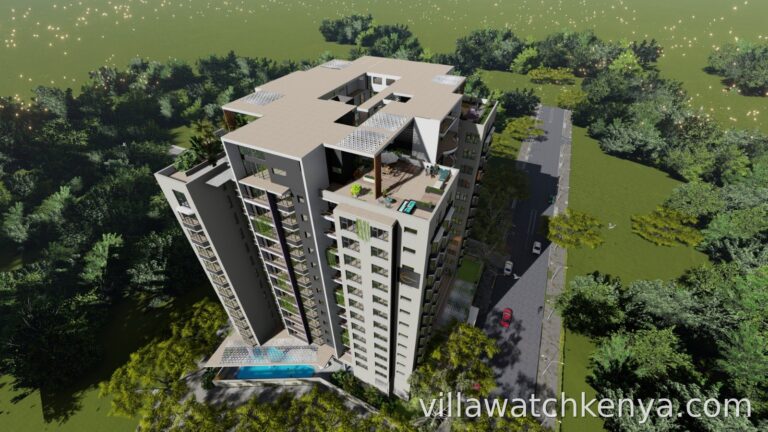
Kilimani is predominantly an apartment market — standalone houses are rare and expensive, while apartment blocks dominate the streetscape. Here are current price benchmarks for 2026:
Apartments for Sale in Kilimani
| Apartment Type | Price Range (KES) | Average |
|---|---|---|
| Studio / Bedsitter | 4M – 7M | ~5.5M |
| 1-Bedroom | 5M – 10M | ~7.5M |
| 2-Bedroom | 8M – 18M | ~13M |
| 3-Bedroom | 15M – 35M | ~22M |
| 4-Bedroom Penthouse | 30M – 55M | ~42M |
Off-plan apartments in Kilimani typically offer a 10–20% discount on completed-unit prices, with payment plans spread over the construction period. Several developments are currently under construction along Kindaruma Road and Dennis Pritt Road.
Houses for Sale in Kilimani
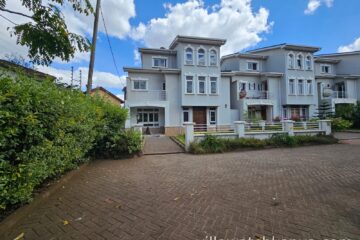
Standalone houses in Kilimani are scarce. Those available are typically older maisonettes on compact plots, priced from KES 45M upward. Most buyers seeking a house-style home in this price bracket look instead at Kileleshwa or Lavington.
Rental Prices in Kilimani
| Apartment Type | Monthly Rent (KES) |
|---|---|
| Studio | 35,000 – 55,000 |
| 1-Bedroom | 50,000 – 90,000 |
| 2-Bedroom | 80,000 – 150,000 |
| 3-Bedroom | 130,000 – 250,000 |
Rental Yields & Investment Returns in Kilimani
Kilimani consistently delivers some of Nairobi’s strongest rental yields, driven by sustained demand from professionals, expatriates, and young families who prefer renting in an established neighbourhood over commuting from the periphery.
- Average gross rental yield: 6% – 8% per year
- Occupancy rates: 85%–95% for well-managed, furnished units
- Capital appreciation: Kilimani properties have appreciated at roughly 5%–7% annually over the past five years, with premium developments commanding stronger growth
- Short-stay demand: Furnished apartments in Kilimani perform exceptionally well on Airbnb and serviced apartment platforms — yields can reach 10%–14% for well-run short-stay units
The neighbourhood’s consistent demand from corporate tenants and the diplomatic community provides a relatively stable rental income base compared to more peripheral areas.
Safety & Security in Kilimani
Kilimani is considered one of Nairobi’s safer residential neighbourhoods, though — as with all Nairobi areas — standard security precautions apply.
- The vast majority of apartment developments include 24-hour guarded access, CCTV, electric fencing, and controlled entry
- The neighbourhood has a well-organised community policing presence and active residents’ associations
- Street crime along the main commercial strips (particularly Argwings Kodhek Road at night) requires awareness, as with any busy urban area
- Gated compounds with professional management are the standard — most buyers and tenants do not experience security incidents
Is Kilimani a Good Place to Invest? (2026 Assessment)
Yes — with some nuance. Kilimani remains one of Nairobi’s most fundamentally sound real estate investment locations, but the market has matured and the easy capital gains of the early 2010s have moderated. Here is an honest assessment:
Reasons to Invest in Kilimani
- Consistently high occupancy: Demand from professionals, NGO workers, and diplomats keeps vacancy low year-round
- Strong short-stay income: Kilimani is one of Nairobi’s top-performing short-stay markets — well-furnished 2-bed apartments regularly achieve KES 7,000–12,000 per night
- Infrastructure quality: Roads, utilities, fibre internet, and retail are at Nairobi’s highest standard
- Central location: Won’t be superseded by newer suburbs — proximity to employment centres is a permanent advantage
- Off-plan discounts: Buying off-plan in established Kilimani developments still offers 10–20% uplift potential by completion
Risks to Consider
- High apartment supply: The volume of new apartment construction in Kilimani has been significant — buyers should carefully compare the quality and management of developments before committing
- Service charges: Well-managed Kilimani developments charge KES 8,000–20,000/month in service charges — factor this into yield calculations
- Parking pressure: Older developments often lack adequate parking, which affects resale value and tenant satisfaction
Pros & Cons of Living in Kilimani
Pros
- Excellent central location — close to everything that matters in Nairobi
- Wide choice of apartment sizes and price points
- Nairobi’s best restaurant and café scene
- Good schools within 10–15 minutes
- Active social scene and community feel
- High-quality apartment buildings with amenities (gym, pool, backup power, borehole water)
- Strong rental demand if you ever want to let your property
Cons
- Peak-hour congestion on main roads can be frustrating
- Higher apartment density means less green space than Karen or Lavington
- Older buildings on smaller plots can feel cramped
- Noise from the restaurant strip can be an issue for some residents
- Monthly service charges add significant cost on top of rent or mortgage
Properties for Sale in Kilimani
VillaWatch Kenya lists verified, title-checked properties across Kilimani — from off-plan apartments and completed developments to rare standalone homes. All listings are physically inspected and priced against current market comparables.
Browse current properties for sale in Kilimani →
Looking to rent instead? View apartments for rent in Kilimani →
Frequently Asked Questions
Is Kilimani expensive to live in?
Kilimani is mid-to-upper range by Nairobi standards. A 2-bedroom apartment rents for KES 80,000–150,000 per month and costs KES 8M–18M to buy. It is less expensive than Muthaiga or Runda but more expensive than Ruaka or Syokimau.
What is Kilimani known for?
Kilimani is best known for its vibrant restaurant and social scene, its central location, and its density of quality apartment developments. It attracts young professionals, NGO workers, and the diplomatic community.
Is Kilimani safe?
Yes — Kilimani is considered one of Nairobi’s safer neighbourhoods. Virtually all apartment developments have 24-hour security, CCTV, and controlled access. Normal urban precautions apply on the streets at night.
What are the best apartments in Kilimani?
The best Kilimani apartments combine professional management, backup power, borehole water, gym facilities, and adequate parking. Developments on Kindaruma Road and Dennis Pritt Road tend to offer the best balance of location, quality, and value. View VillaWatch Kenya’s current Kilimani listings for vetted options.
nnnSources & Further Reading
nnnn- Kenya National Bureau of Statistics — Population & Housing Data
- Knight Frank Kenya — Annual Property Market Report
- Central Bank of Kenya — Mortgage Market Statistics
More Kilimani Guides
- Best Apartment Complexes in Kilimani 2026
- Kilimani vs Kileleshwa: Which Should You Choose?
- 3 Bedroom Apartments for Sale in Kilimani
- Kilimani Apartment Prices Guide
- All Apartments for Sale in Kilimani — From KSh 4.5M
Related Reading
- Serviced Apartments in Nairobi (2026) — rates and best buildings, including Kilimani
- Riverside Drive vs Kilimani — which suburb suits your budget and lifestyle
Right next door to Kilimani, explore apartments for sale in Riverside Drive — verified listings with prices, photos and floor plans.