Living in Ngong vs Kerarapon Drive: Why Ngong Is the Smarter Choice in 2026
If you are weighing living in Ngong against a plot along Kerarapon Drive, you are really choosing between two different bets on the Karen–Ngong corridor. Living in Ngong puts you inside a fast-growing town; Kerarapon puts you on its quiet, expensive edge. Kerarapon offers quiet, Karen-adjacent prestige. Ngong offers something rarer in today’s market: a town that is visibly building its own economy. In 2026, the momentum — and the value — sits firmly with Ngong, and this guide lays out exactly why.
Ngong vs Kerarapon Drive at a Glance
| Factor | Ngong | Kerarapon Drive |
|---|---|---|
| 1/8-acre land (good location) | KES 4M – 6M | Typically KES 10M – 18M equivalent |
| Banking | I&M Bank and major banks in town | None — drive to Karen |
| Shopping & dining | Milele Mall: Artcaffe, China Square; 24-hour supermarkets | None on the Drive — Karen dependent |
| Growth trajectory | Fast — new commercial anchors yearly | Slow by design (low-density residential) |
| Road network | Much improved — tarmacked links and bypass access | Single access road |
| Character | Self-sufficient growing town, cool climate | Quiet, exclusive, forest-edge living |
Ngong Is Building Its Own Economy — Kerarapon Borrows Karen’s
The single biggest shift in Ngong over the past two years has been commercial. The arrival of Milele Mall brought brands that signal genuine middle-class confidence: China Square, and modern retail under one roof. I&M Bank has joined the banking row in town, Artcaffe and 24-hour supermarkets now serve a population that increasingly works, shops and socializes without leaving Ngong.
That matters because retail anchors of this calibre do not open on speculation — they follow verified spending power. When Artcaffe picks a location outside its traditional Karen–Westlands circuit, it is confirming what land buyers in Ngong have sensed for years: this town has crossed from dormitory settlement to self-sufficient urban centre. Ngong sits at the foot of the Ngong Hills, and its population growth over the past decade explains the retail interest.
Kerarapon Drive, by contrast, has no commercial spine of its own — and its residents prefer it that way. Every supermarket run, bank visit and dinner out happens in Karen. That is a perfectly good lifestyle if you are buying KES 30M+ Karen-adjacent exclusivity. But you are paying a premium for proximity to amenities you still have to drive to.
The Land Mathematics: 4–6M vs a Karen-Adjacent Premium
A well-located eighth-acre (50×100) in Ngong — close to the tarmac, water and power — currently averages KES 4–6 million. Along Kerarapon Drive, land trades at a steep Karen-adjacent premium, typically two to three times more per eighth-acre equivalent, and most parcels are sold in quarter-acre-plus sizes that push entry costs higher still.
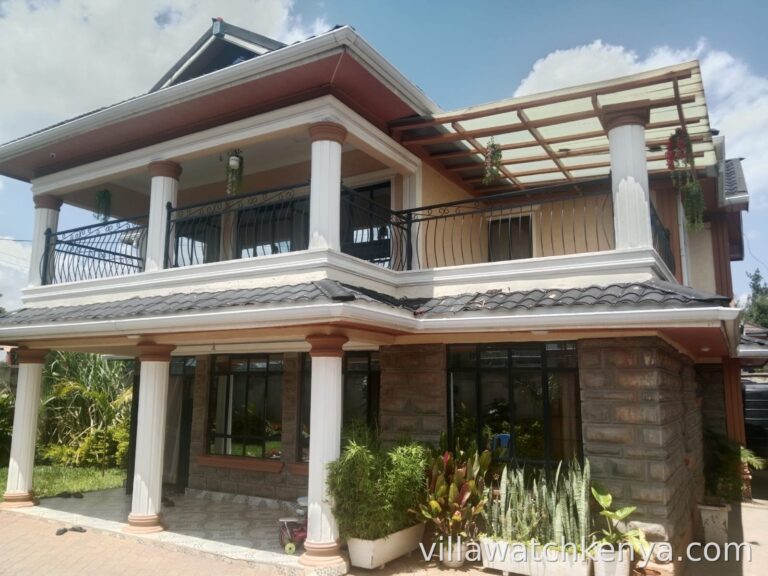
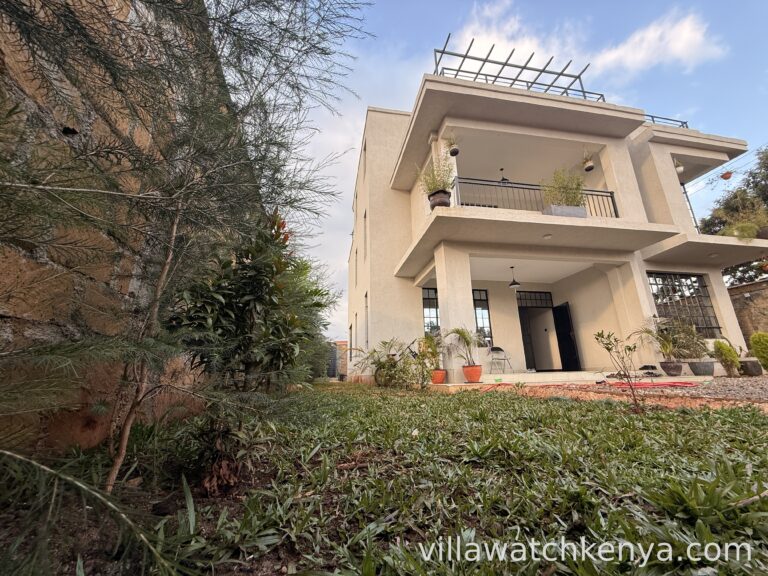
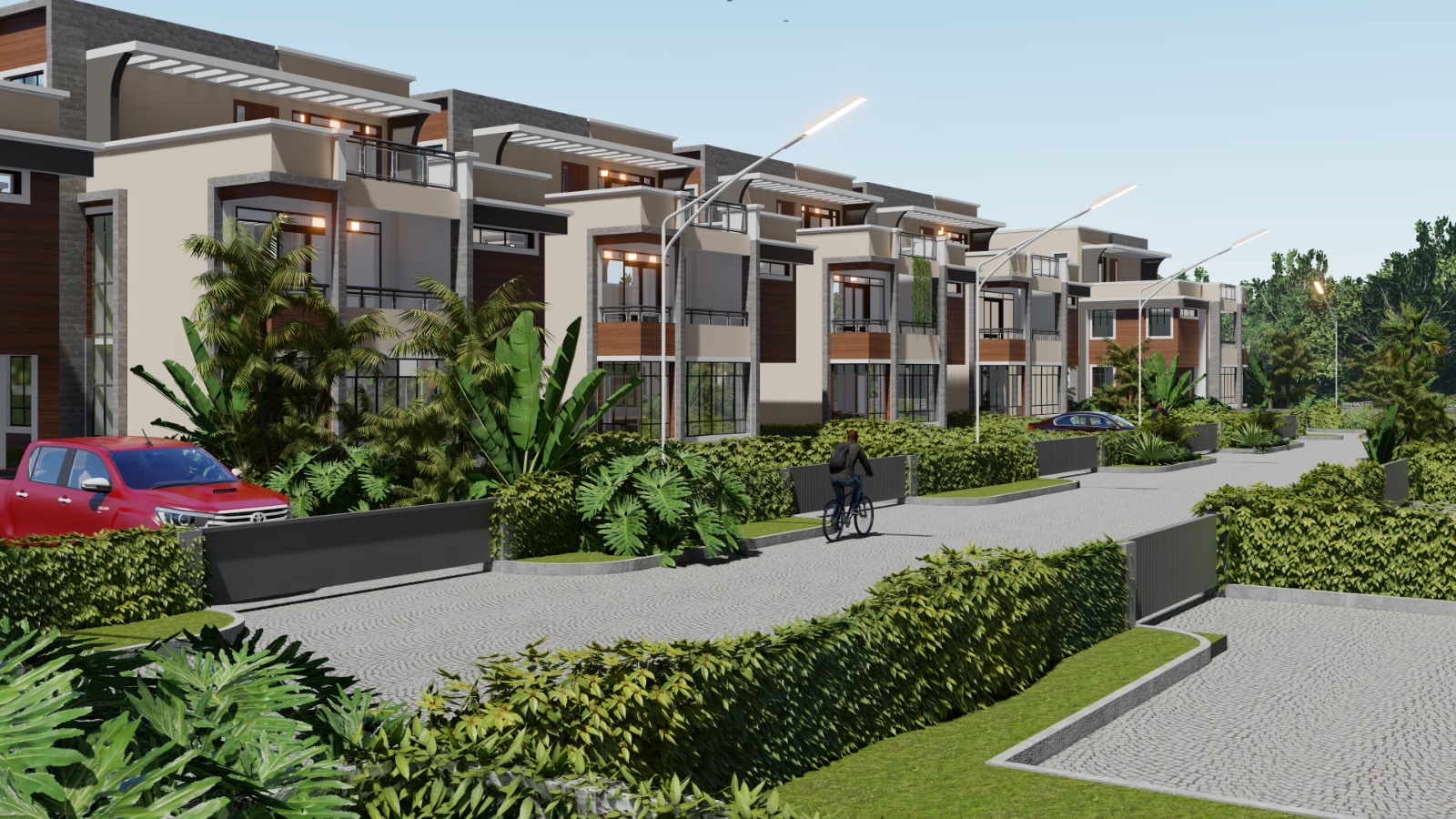
Put practically: the budget that buys you bare land on Kerarapon builds you a complete four-bedroom home on your own plot in Ngong — with money left over. Developers have noticed: modern gated projects like the 4-bedroom townhouses on Karen–Olkeri Road (from KES 27.9M) are positioning exactly on this corridor to capture buyers who want Karen access at Ngong-side pricing.
Roads: The Quiet Game-Changer
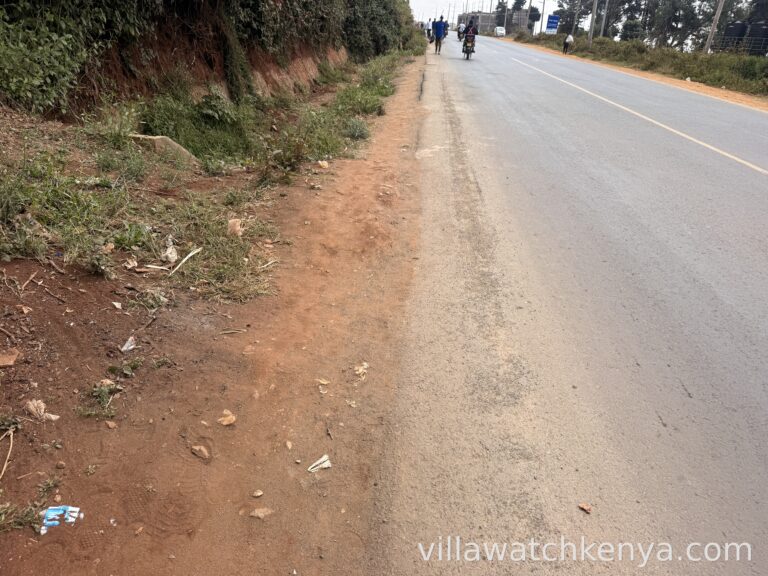
Ngong’s historic weakness was the commute. That has changed materially: the improved Ngong–Suswa road, better tarmac through Kibiku and Matasia, and Southern Bypass connections have cut journey times and — just as important — made them predictable. For daily commuters, living in Ngong has never been more practical. Matatu service is frequent and runs late; the road network now supports the town’s 24-hour economy rather than throttling it. Our Ngong–Suswa road corridor guide maps the pockets that benefit most.
Kerarapon Drive remains a single access road. It is quiet — which residents value — but one incident, one grading delay, one rainy-season washout affects every household on it.
Living in Ngong: Where Your Money Grows Faster
Land in Ngong has been appreciating at roughly 8–10% annually — among the fastest in the Nairobi metro — driven by exactly the forces above: infrastructure, commercial anchors and middle-class family demand. Each new anchor (a mall, a bank, a school) re-rates the surrounding 3–5 km of land. With Milele Mall now open, the next re-rating is already underway.
Kerarapon’s values track Karen’s: stable, prestigious, slow. Nothing wrong with that — but if you are buying for growth rather than parking wealth, the asymmetry is obvious. We covered the investment case in depth in why Ngong is Nairobi’s smartest property move in 2026.
Who Should Still Choose Kerarapon Drive?
To be fair to the Drive: if your budget is KES 25M+ for land alone, you want forest-edge serenity, half-acre privacy and a Karen address-by-association — and you do not mind driving for every errand — Kerarapon delivers a genuinely beautiful, low-density lifestyle that Ngong town cannot replicate. Buyers in that bracket should also weigh Karen proper; our complete Karen living guide covers it.
For everyone else — young families building their first home, investors land-banking ahead of growth, and anyone who values walkable amenities — living in Ngong is simply the more viable choice in 2026.
The Verdict on Living in Ngong vs Kerarapon
- Choose Ngong if: you want land at KES 4–6M, real amenities (Milele Mall, I&M Bank, Artcaffe, China Square, 24-hour supermarkets), improving roads and 8–10% annual appreciation.
- Choose Kerarapon Drive if: you have a KES 25M+ land budget, prize seclusion above convenience, and are buying lifestyle rather than growth.
For the wider market picture, see our average property prices in Nairobi by area.
Frequently Asked Questions
Yes. Ngong now combines what used to be mutually exclusive: affordable land from KES 4–6 million per eighth-acre in good locations, serious commercial amenities — I&M Bank, Artcaffe and China Square at Milele Mall, 24-hour supermarkets — and a much-improved road network, all under a cool, green Ngong Hills climate.
Well-located eighth-acre (50×100) plots in Ngong currently average KES 4–6 million, with plots in emerging pockets still available below that. Comparable Karen-adjacent land along Kerarapon Drive typically trades at two to three times more per eighth-acre equivalent — where subdivision is possible at all.
Kerarapon Drive offers quiet, low-density, Karen-adjacent exclusivity but depends almost entirely on Karen for shopping, banking and dining. Ngong is a self-sufficient, fast-growing town with its own malls, banks, hospitals and 24-hour supermarkets — at a fraction of the land cost.
Ngong has been among the fastest-appreciating satellite areas in the Nairobi metro, with land prices rising roughly 8–10% annually as infrastructure and commercial development draw in middle-class families. New anchors like Milele Mall typically accelerate that growth in the surrounding 3–5 km radius.
Browse Ngong Properties
Want a verified shortlist of Ngong plots in the KES 4–6M range? Call or WhatsApp 0722 077 779 — we will send title-checked options within 24 hours.